
Ever stared at a plot of land and wondered how it becomes a home? You are not alone. The new build process in the UK can feel complex and daunting — especially if it is your first time. But with the right guidance and an experienced team by your side, it is far more straightforward than you might think. At Builders in Poole, we have helped homeowners and developers across Dorset bring their new build visions to life. This guide walks you through every key stage, clearly and honestly.
First Things First: Is a New Build Right for You?
Before diving into timelines and planning applications, it is worth pausing and asking yourself a simple question — why a new build? According to the Federation of Master Builders, over 60% of self-builders in the UK say they chose to build rather than buy because they wanted a home designed entirely around their needs. And that is the real appeal.
A new build gives you full control over layout, specification, energy efficiency, and finish. You are not inheriting someone else’s decisions or compromising on things that matter to you. That said, it does require patience, budget discipline, and a reliable building contractor who knows the local area inside out.
Stage 1: Site Finding and Initial Feasibility
Every new build project begins with land — and not all land is created equal. Before committing to a purchase, it is essential to carry out a feasibility assessment that looks at ground conditions, flood risk, access, utilities, and any planning constraints that might affect your proposed development.
In Poole, this is particularly important. Proximity to the harbour, designated Areas of Outstanding Natural Beauty, and local conservation areas can all influence what you are permitted to build and how. A good building contractor or architect will flag these issues before you spend a penny on the land itself.
Pro tip: Always commission a ground investigation survey before buying a plot. Poor ground conditions can add tens of thousands of pounds to your foundation costs — and that is a nasty surprise nobody wants.
Stage 2: Design, Planning Permission and Building Regulations
Full planning permission is required for all new residential builds in the UK, submitted to BCP Council with supporting documents, and a decision is typically issued within eight to thirteen weeks.
Getting Your Design Right
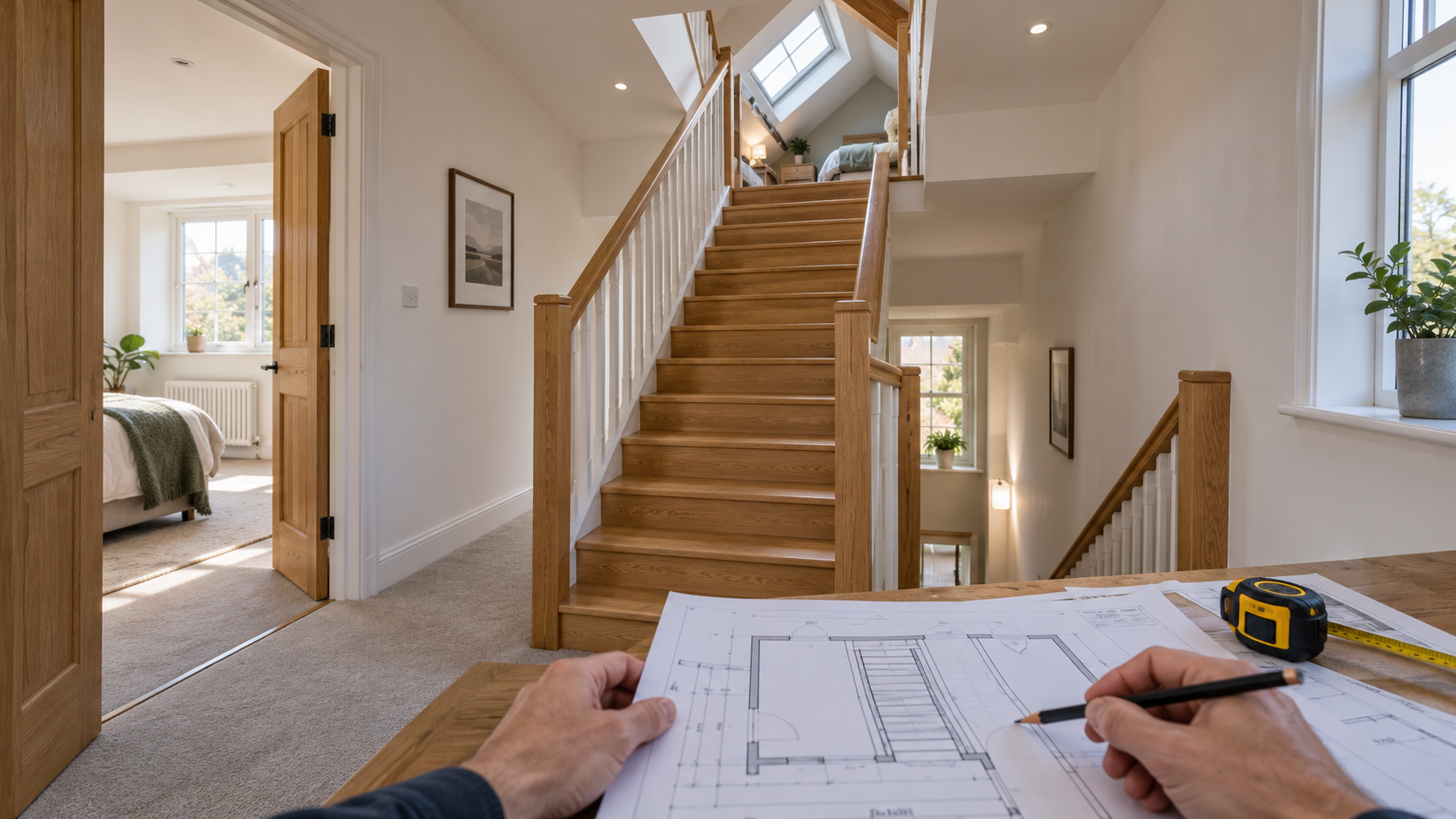
Once you have secured your plot, the design phase begins. Working closely with an architect, you will translate your vision into detailed technical drawings — floor plans, elevations, site layouts, and material schedules. This is where your new home starts to take shape on paper, and it is worth investing time and care at this stage to get it right.
For new builds in Poole, the design needs to be sympathetic to the local character of the area. BCP Council, the local planning authority, will assess how your proposed property relates to neighbouring buildings, the street scene, and the wider landscape before making its decision.
Applying for Planning Permission
- Full planning permission is required for all new residential dwellings in the UK — no exceptions.
- Your application must include a design and access statement, site plans, and where applicable, ecological or flood risk assessments.
- A standard planning application typically takes eight to thirteen weeks to be decided by your local authority.
- Pre-application advice from your local planning officer is invaluable — it saves time, reduces risk, and strengthens your submission.
- In Poole, applications are submitted to BCP Council, who will assess the design against local planning policies and the character of the surrounding area.
- At Builders in Poole, we work closely with our clients’ architects throughout the entire planning process to ensure every application is as strong as possible.
Building Regulations Approval
Planning permission and building regulations approval are two separate things, and both are required. While planning deals with the appearance and use of your new home, building regulations set the technical standards for how it must be constructed — covering everything from structural integrity and fire safety to insulation and drainage. Your structural engineer and architect will prepare the necessary technical drawings, and a building control inspector will make regular site visits throughout the construction phase.
Stage 3: Selecting Your Building Contractor
Choosing the right builder is, without question, the most critical decision in the entire new build process UK. Your contractor will be responsible for turning your architect’s plans into a real, physical home — coordinating all the trades, managing materials, and ensuring the project stays on time and on budget.
When evaluating contractors, go beyond the price. Look for local experience, transparency, a clear portfolio of completed new builds, and genuine references from previous clients. A builder who knows the Poole area will understand the local planning requirements, soil conditions, and supply chains — and that knowledge is genuinely valuable.
At Builders in Poole, we provide detailed, itemised quotations from the outset. No vague estimates, no nasty surprises. Just clear, honest pricing and a project team that keeps you informed every step of the way.
What to look for in a new build contractor:
- Proven local track record with new build projects
- Full public liability and employer’s liability insurance
- Qualified, CSCS-carded tradespeople on site
- Transparent project management and regular client updates
- Clear, written contract with agreed milestones and payment schedule
Stage 4: Construction — From Groundworks to Handover
Construction begins with groundworks — clearing the site, excavating foundations, and installing below-ground drainage. In Poole, ground conditions vary significantly, so a solid foundation design based on a proper ground investigation survey is absolutely essential.
Groundworks and Foundations
With approvals secured and a contractor appointed, the exciting part begins. Groundworks mark the start of physical construction — clearing and preparing the site. Excavating for foundations and installing the below-ground drainage infrastructure. This stage can feel slow from the outside, but it is the foundation (literally) upon which everything else rests. Getting it right is non-negotiable.
Superstructure, Roofing and First Fix
Once the foundations are in place, the superstructure takes shape. External walls go up, internal partitions are formed, floor structures are laid, and the roof is erected and made weathertight. This is the stage where your new home starts to look like a building rather than a house. Than a muddy hole in the ground — and it never gets old watching it rise from the earth.
First fix works follow once the shell is weathertight — structural carpentry, plumbing pipework, electrical cabling, and mechanical systems are all installed before plastering begins. Everything that will eventually be hidden within the walls and floors is put in place at this stage and tested before being concealed.
Second Fix, Finishing and Snagging
Plastering transforms the shell into habitable rooms, and second fix works then complete the picture — doors, skirting, kitchen units, sanitaryware, radiators, light fittings, and all the finishing touches that turn a building into a home. External works, including landscaping, driveways, and boundary treatments, are completed in line with the approved planning conditions.
Before handover, a thorough snagging process identifies and resolves any outstanding defects. Building control issues a Completion Certificate confirming regulatory compliance. And your builder will walk you through the finished property, demonstrating all systems. And ensuring you are completely satisfied before the keys are handed over.
How Long Does the New Build Process Take in the UK?
This is the question we get asked most often — and the honest answer is that it depends. A standard three or four-bedroom detached home typically takes between nine and fourteen months from groundworks commencing to practical completion. Factor in the time needed for design, planning, and contractor selection, and you are looking at an overall programme. Of eighteen months to two years from concept to move-in day.
Larger or more complex developments naturally take longer and unforeseen issues — particularly ground conditions or planning delays — can extend timescales. Working with an experienced local contractor who has a realistic, well-managed programme from day one is the best way to keep things on track.
What Does a New Build Cost in the UK?
New build costs in Poole and Dorset typically range from £1,800 to £2,800 per square metre, depending on size, specification, and ground conditions. According to the NHBC, the south of England average sits at around £2,100 per square metre. Remember, build cost is only part of the picture — professional fees, planning charges, utility connections, and landscaping all add to the overall budget. Always request a detailed, itemised quote before committing.
Why Builders in Poole?
We know the Poole area inside out. We understand the local planning environment, the soil conditions, the architectural character of the neighbourhoods we work in, and the standards that BCP Council expects from new residential developments. That local knowledge, combined with our commitment to quality craftsmanship and transparent communication, is what sets us apart.
Every new build project we undertake is managed in-house from start to finish. One point of contact, one team, one standard of quality — from the first spade in the ground to the day we hand you your keys.
- Fully insured and accredited building contractor
- Experienced team of qualified tradespeople and project managers
- Free, no-obligation consultations and site assessments
- Transparent pricing with itemised quotations
- Proud to serve Poole, Bournemouth, Wimborne, and across Dorset
Ready to Start Your New Build Project in Poole?
If you are planning a new build in Poole or the surrounding Dorset area and would like honest, expert guidance from a team that truly knows the process, get in touch with Builders in Poole today. We offer free, no-obligation consultations and would love to hear about your project. Whether you are at the early ideas stage or ready to break ground, we are here to help you build with confidence.
Frequently Asked Questions (FAQs)
How long does the new build process take in the UK?
From groundworks to practical completion, a standard new build typically takes nine to fourteen months. Including design and planning, the full process from concept to move-in is usually eighteen months to two years.
Do I need planning permission for a new build in the UK?
Yes. Full planning permission is required for all new residential dwellings in the UK. Applications are submitted to your local planning authority — in Poole, that is BCP Council — and decisions are usually issued within eight to thirteen weeks.
What is included in the new build construction cost?
Build costs cover labour and materials for the construction works. You will need to budget separately for architect and structural engineer fees, planning application charges, utility connection costs, and external works such as landscaping and driveways.
What is a snagging survey on a new build?
A snagging survey is a thorough inspection carried out before handover to identify any defects, incomplete works, or items that do not meet the agreed specification. Your builder should resolve all snagging items before the Completion Certificate is issued and keys are handed over.
What warranty comes with a new build home in the UK?
Most reputable builders provide a ten-year structural warranty on new build properties, often through NHBC Buildmark or a similar provider. This protects against major structural defects for a decade following practical completion.