

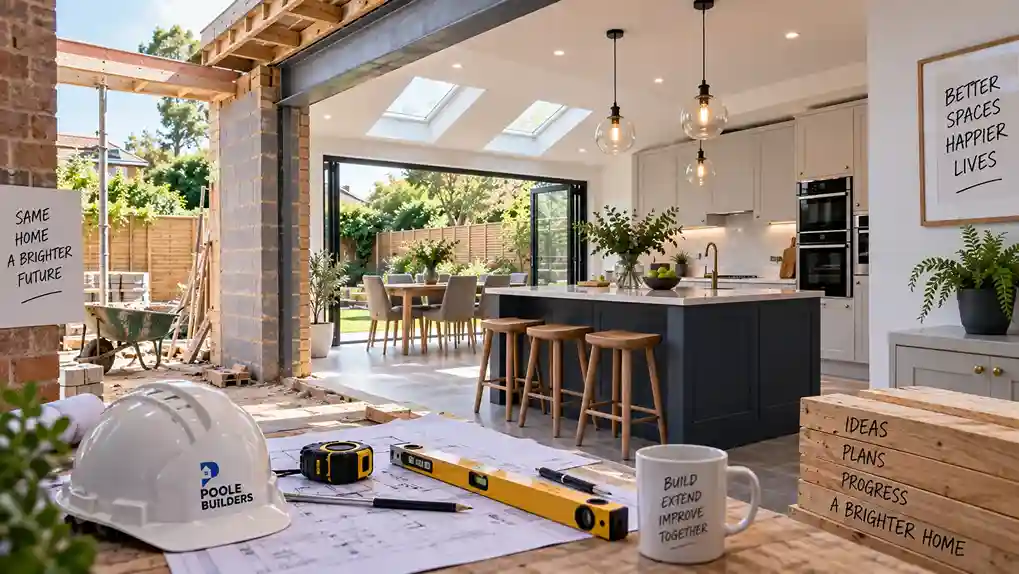
Thinking about a new build in Poole? Before you sign with anyone, here’s a hard truth: the builder you choose matters more than the plot, the design, or even the budget. We’ve seen homeowners pick the cheapest quote, only to spend the next year chasing deadlines and paying for extras nobody warned them about. It’s far more common than you’d think. Get this one decision right, and the whole process becomes genuinely exciting. After more than a decade building homes across Poole, we know exactly what separates a great builder from a costly mistake.
Why Choosing the Right Builder Matters So Much
A new build isn’t a kitchen refit you can redo if it goes wrong. It’s a long, complex project involving planning permission, groundworks, structural work, dozens of trades, and a serious chunk of your savings. The numbers back this up. Research suggests that construction planning and management failures are behind the majority of costly delays in new home projects — and the most common root cause is hiring the wrong team. One homeowner we know paid £15,000 to put right the foundations that a previous builder had underspecified. That’s not a rare horror story. It’s a Tuesday in this industry.
Start With Local Experience
When it comes to a new build in Poole, local knowledge isn’t a nice-to-have — it’s important. Poole has its own quirks. The sandy ground near Poole Harbour affects how foundations need to be specified. The clay-bearing soil in Canford Heath and Broadstone shrinks in summer and swells in winter, which can move foundations that weren’t designed for it. Period properties near Poole Old Town come with planning constraints that catch out builders from elsewhere. And every project goes through the BCP Council for planning and building regulations. A builder who works in Poole every week already knows all of this. A builder driving in from two counties away is learning on your project — at your expense.
Check Their Track Record (Properly)
Anyone can put photos on a website. Your job is to look behind them.
A trustworthy builder will happily provide:
- References from recent local clients — and let you actually contact them
- Addresses or photos of completed new builds in the area
- Reviews on independent platforms, not just their own site
- A portfolio that matches the type of build you’re planning
Don’t just collect references — use them. Ring two or three past clients and ask the real questions: Did the project finish on time? Did the final cost match the quote? How did the builder handle problems? Would you use them again?
Verify Insurance, Accreditations and Qualifications
This is the boring bit that saves you the most money.
Before you let anyone near your plot, confirm they hold:
- Public liability insurance (protects you if something goes wrong on site)
- Relevant trade accreditations, such as the Federation of Master Builders (FMB) or TrustMark
- Appropriate qualifications for specialist work, including Part P for electrical work
- A recognised new build warranty provider (such as NHBC or equivalent)
A reputable builder won’t bristle when you ask for these. They’ll have them ready. If someone gets defensive or vague about insurance and accreditations, treat that as your answer.
Get Detailed, Itemised Quotes — Then Compare Properly
The lowest number is cheap for a reason. Either the builder has missed something, or they’ve left it out deliberately to win the job, knowing they’ll add it back later as a variation once you’re committed. Site clearance, waste removal, groundwork preparation, and specialist services are the items that mysteriously reappear mid-build. Get at least three quotes, and make sure each one is itemised and broken down by trade. Then compare like for like. A slightly higher quote that includes everything is almost always cheaper than a low quote that balloons halfway through.
Insist on a Written Contract
Verbal agreements are the number one cause of construction disputes in the UK. A proper written contract should set out the scope of work, the fixed price (or clear pricing structure), the payment schedule, the timeline, the materials specification, the process for any variations, and how disputes will be resolved. Under the Consumer Rights Act 2015, builders must carry out work with reasonable care and skill — but enforcing your rights is far harder without a solid contract behind you. If a builder is reluctant to put things in writing, that reluctance is information you should act on.
Judge How They Communicate
Pay close attention to how a builder communicates before you hire them — because it only gets more important once work starts. Do they turn up to the site visit on time? Do they answer your questions clearly, or talk in vague reassurances? Do they explain what could go wrong, or just tell you everything will be fine?
The best builders are honest about risk. When we quote a new build, we tell clients exactly where the potential problems are — the ground conditions, the planning timeline, the things that could add cost. A builder who promises a perfectly smooth project either hasn’t done many, or isn’t being straight with you.
Ask the One Question That Reveals Everything
Before you sign anything, ask your builder: What could go wrong with this project? A genuinely experienced builder will give you a thoughtful list. They’ve seen it all before — the weather delays, the ground surprises, the planning hold-ups — and they’ll talk you through how they manage each one. An evasive answer, or a breezy oh, nothing, we do these all the time is a warning sign worth taking seriously.
Red Flags to Walk Away From
To keep it simple, here are the warning signs that should make you pause:
- Pressure to pay large sums upfront
- No written contract or itemised quote
- Reluctance to share insurance or references
- A quote far cheaper than all the others
- Vague answers about timelines and costs
- No fixed point of contact or project manager
- No local new build experience
Any one of these on its own is a caution. Two or more together? Keep looking.
How Builders in Poole Do Things Differently
At Builders in Poole, we’ve built our reputation on doing the unglamorous things properly. Every new build we take on includes a proper site investigation before we quote. A written and itemised quote with no hidden extras, a dedicated project manager from first call to final handover, and full BCP Council planning and building regulations handled for you.
We work across Poole and its neighbourhoods — Canford Heath, Parkstone, Hamworthy, Broadstone, Sandbanks and Poole Old Town — and we tell our clients what could go wrong before it does. We don’t oversell, and we don’t underdeliver. That honesty is exactly why so much of our work comes from referrals.
Ready to Start Your New Build the Right Way?
Choosing the right builder doesn’t have to be a gamble. Ask the right questions, check the right things, and trust your instincts when something feels off. If you’re planning a new build in Poole and want a straight-talking conversation about your project — realistic timelines, honest costs, and no pressure — we’d love to help. Get in touch with Builders in Poole today for a free, no-obligation site visit and an honest assessment of your project.
Frequently Asked Questions (FAQs)
How do I choose a good builder for a new build in Poole?
Look for local experience, proper insurance, trade accreditations like the FMB, and references you can actually check. Get at least three itemised quotes and never hire on price alone.
What questions should I ask a builder before hiring?
Ask how many new builds they’ve completed locally, whether they’re insured and accredited. Who manages the site daily, what the payment schedule is, and what could go wrong on your project.
How many quotes should I get for a new build?
Always get at least three written, itemised quotes. This lets you compare like-for-like and spot any builder who’s left out costs to win the job with a lower price.
Should a builder have insurance?
Yes. Always confirm your builder holds public liability insurance before work begins. Reputable builders provide certificates without hesitation — reluctance to share them is a major red flag.
Do I need a written contract with my builder?
Absolutely. A written contract covering scope, price, timeline, and variations protects you legally. Verbal agreements are the leading cause of construction disputes in the UK.
How can I tell if a builder is reliable?
Reliable builders communicate clearly, turn up on time, stick to budgets, and flag problems early. Check independent reviews, visit past projects, and speak to recent local clients.