

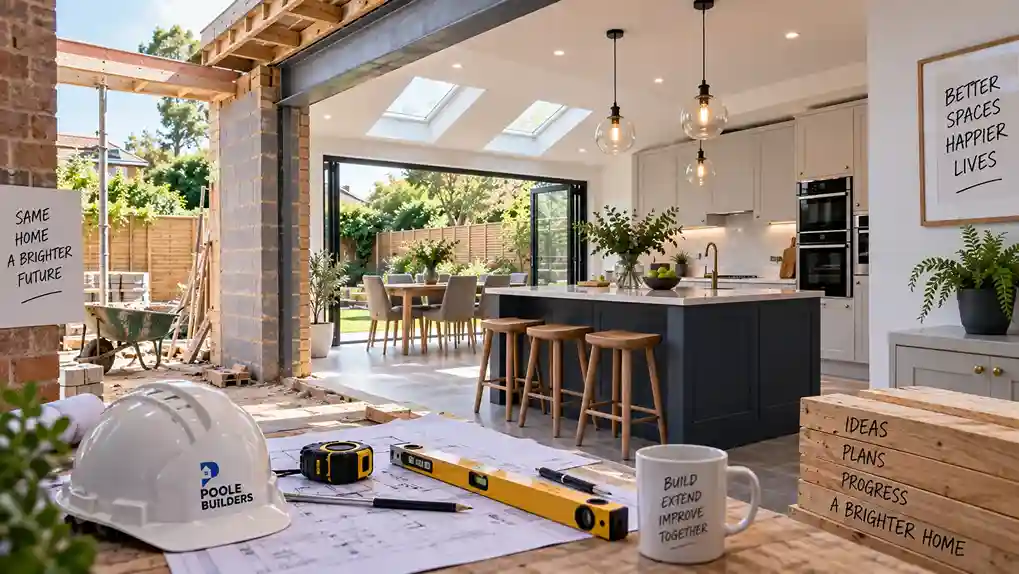
You’ve made the decision. The extension is happening. The kids need their own bedrooms, the kitchen needs opening up, and moving simply isn’t on the cards. But then the next question hits you: when should we actually start? It’s one of the most common questions we get asked at Builders in Poole, and the honest answer isn’t as simple as spring or summer. Every season has trade-offs — some obvious, some hidden — and the right time to start depends on your project, your builder’s availability, and what you’re prepared to work around. After more than a decade extending homes across Poole — through mild winters, wet springs, and hot summers — we’ve built up a clear picture of which seasons work best for which projects. Here’s the straight-talking guide we wish every homeowner had before booking a builder.
Why Timing Matters More Than You Think
A house extension isn’t a single job — it’s a sequence of tasks, and each one has its own weather sensitivity. Groundworks and foundations rely on dry conditions. Bricklaying needs temperatures above 4°C to allow mortar to set properly. Roofing needs still, dry days. Internal fit-out doesn’t care about the weather at all. When you start affects which of these stages hits which season — and that changes everything from build speed to overall cost. According to Met Office data, Poole enjoys some of the driest conditions on the south coast, but it’s still Britain. Rain, wind, and cold snaps can and do disrupt every build. Timing your project properly helps you sidestep the worst of it.
Spring (March–May): The Most Popular Choice
For most homeowners in Poole, spring is the ideal time to start a house extension — and for good reasons.
The advantages:
- Mild weather perfect for groundworks and foundations
- Longer daylight hours mean longer working days
- The shell can be watertight before autumn rains arrive
- Builders are keen after the quieter winter period
- Materials are widely available with shorter lead times
The catch:
Spring is the busiest booking season. If you want to start in March or April, you should be talking to your builder at least 4–6 months in advance. Otherwise you’ll find every reputable local builder — including us — is already booked up. Spring works especially well for larger projects like double-storey extensions, where getting the roof watertight before winter is critical.
Summer (June–August): Fast Progress, Long Days
Summer offers the best construction weather of the year, but it comes with its own trade-offs.
The advantages:
- Dry weather means minimal delays on external work
- Very long daylight hours (up to 16 hours in June)
- Concrete and mortar cure quickly and reliably
- Ideal for garden-side and rear extensions
The catch:
Summer building season means peak disruption during peak family time. School holidays, garden parties, and hot houses full of dust and tradespeople rarely mix well. Builders are also at their busiest, which can push your project to the back of the queue if you’re not booked in early.
Summer is best for projects with a clear scope and a start date locked in months ahead.
Autumn (September–November): The Sweet Spot Nobody Talks About
Autumn is quietly one of the best times to start a house extension in Poole — and one of the most overlooked.
The advantages:
- Weather is still relatively mild through September and October
- Builder waiting lists start to shorten
- Groundworks and shell construction can be completed before deep winter
- Internal fit-out happens during the coldest, wettest months (when it doesn’t matter)
- You’re finished and enjoying the new space by spring
The catch:
You need to start early enough — ideally by mid-September — to get the roof on before storms arrive. Miss that window, and you’re starting groundworks in October rain. Autumn works especially well for single-storey extensions where the shell can be closed in within 4–6 weeks.
Winter (December–February): The Underrated Season
Most homeowners assume winter is a terrible time to build. It’s not — as long as you plan properly.
The advantages:
- Builders often have more availability
- Some material prices are lower during off-peak months
- Internal work continues regardless of the weather
- Fitting kitchens, bathrooms, and finishes over winter means the extension is ready for spring/summer garden use
The catch:
Cold snaps can pause bricklaying (mortar can’t be laid below 4°C without special additives), and frost can affect groundworks. Rain — always a factor on the Dorset coast — can delay external stages. Winter builds work best when the shell is already up (from an autumn start) and the focus shifts to first fix, second fix, and internal finishes.
What About Planning Permission Timelines?
BCP Council typically takes around 8 weeks to determine a householder planning application, and complex applications can take longer. Add in architectural drawings, structural surveys, and building regulations approval, and you’re looking at 3–4 months before a single spade hits the ground. That means if you want to start on site in spring, you should be starting the design and planning process the previous autumn — not the same spring.
How Poole’s Location Affects Timing
Ground conditions: The sandy soil near Poole Harbour drains well but can shift. Clay-heavy areas like Canford Heath and Broadstone are prone to shrink-and-swell cycles, meaning foundations need proper drying conditions.
Coastal weather: The Dorset coast catches its share of storms and strong winds, particularly in autumn and winter. Roofing and external cladding work benefits from being scheduled around forecasts.
Conservation areas: In Poole Old Town and other protected areas, planning permission can take longer, so time your applications accordingly.
A builder with genuine Poole experience will factor all of this into your project timeline from the very first quote.
So What’s Actually the Best Time?
Here’s the honest answer: the best time to build a house extension in Poole is when you’re ready — provided you plan for it properly.
If we had to pick one ideal window, it would be:
- Start planning in autumn (design, drawings, planning application)
- Start on site in spring (groundworks, shell, external work)
- Complete internally through summer (finishes, snagging, handover)
That sequence gets the weather-critical work done in the best conditions, while allowing enough lead time for BCP Council planning approval and material orders.
Book Your Builder Early
The single most important timing decision isn’t when to start — it’s when to book your builder. Reputable builders in Poole are typically booked 4–6 months in advance, and sometimes longer during peak spring and summer periods. If you want to work with a specific team, get in touch well before your ideal start date.
At Builders in Poole, we’re upfront about our availability from day one. If we can’t start when you need us to, we’ll tell you — because misleading you about timelines is exactly the kind of thing that ruins projects and reputations. We’re accredited members of the Federation of Master Builders (FMB), fully insured, and we manage every project directly from first site visit to final handover.
Ready to Start Planning Your House Extension?
Whatever season you’re thinking about, the earlier you start planning, the better your project will run. Good design, proper planning permission, honest quotes, and a builder booked in advance make the difference between a smooth extension and a stressful one. If you’re considering a house extension in Poole and want honest answers about the best time to start yours, we’d love to help. Get in touch with Builders in Poole today for a free, no-obligation site visit and a straight-talking conversation about your project.

Frequently Asked Questions (FAQs)
What’s the best month to start a house extension in Poole?
April or May — mild weather, long daylight hours, and the shell can be watertight before autumn rains arrive.
Can you build a house extension in winter?
Yes — internal work continues fine, but bricklaying stops below 4°C, so an autumn start with winter fit-out often works best.
How far in advance should I book a builder for a house extension?
Book at least 4–6 months ahead, especially if you want to start in spring or summer when reputable Poole builders are fully booked.
Does weather really delay a house extension?
Yes — heavy rain, frost, and storms mainly affect groundworks, bricklaying, and roofing, though internal work is largely unaffected.
How long before starting should I plan a house extension?
Allow 3–4 months for architectural drawings, structural surveys, and BCP Council planning approval before any building work begins.