
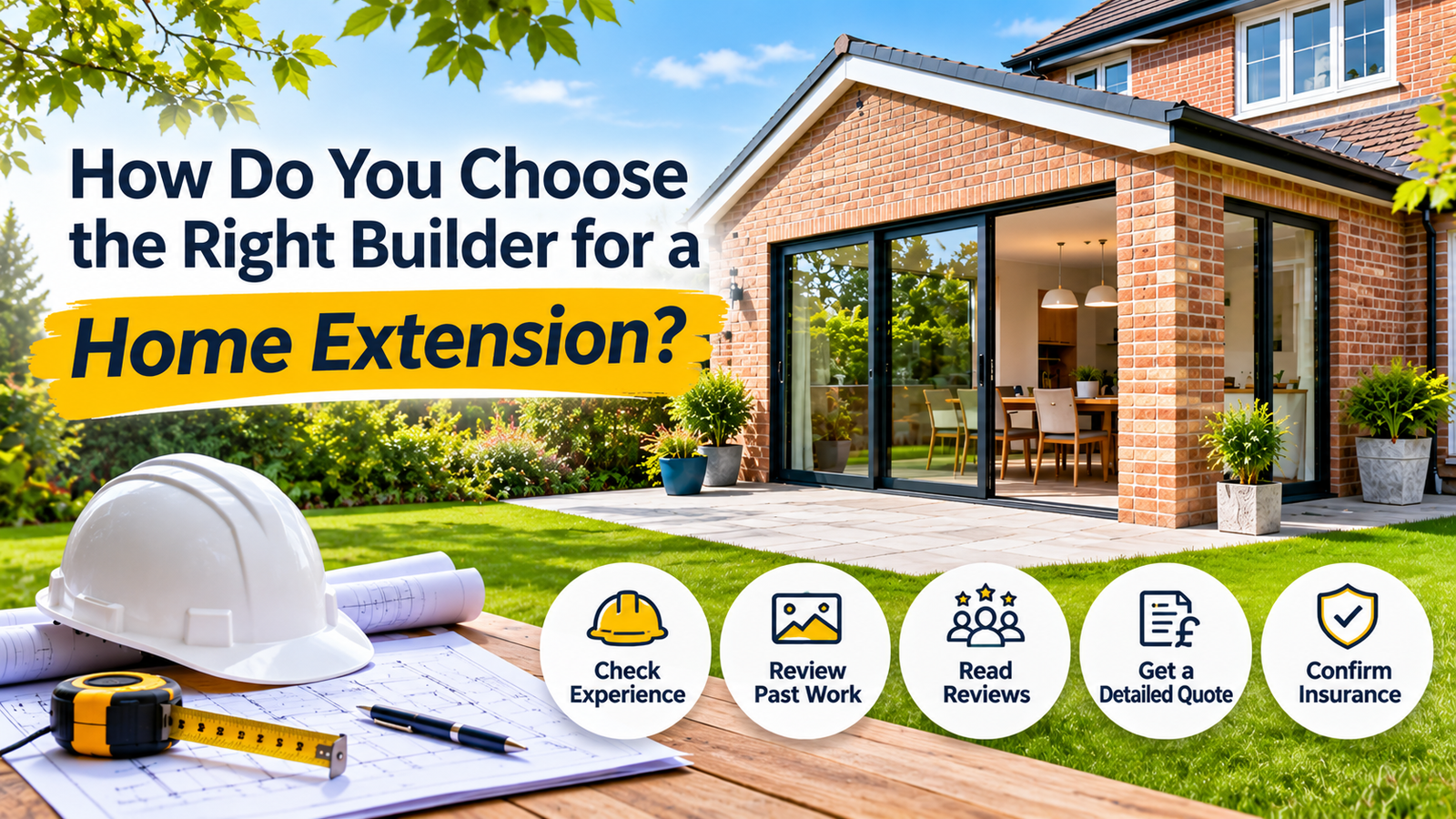
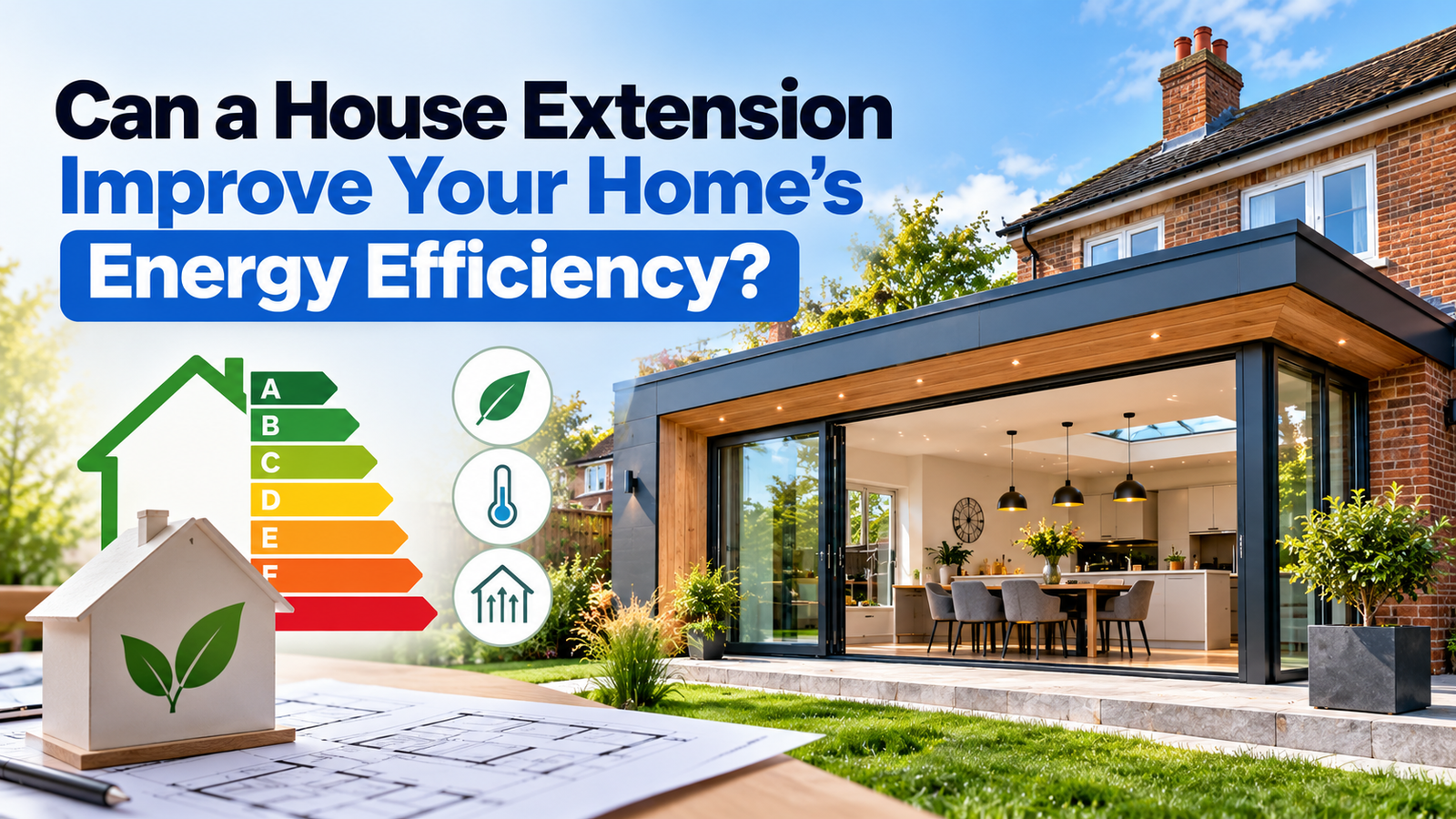
An extension changes how your home works every day, which is why the builder you appoint matters as much as the design on paper. A well planned extension adds light, space and flexibility. A badly managed one brings delays, poor communication and workmanship you end up living with for years.
The short answer is this. Choose a builder who has delivered projects like yours, can show you completed work and genuine references, holds the right insurance, puts everything in a written contract, understands planning and building regulations, and communicates clearly from the first conversation. The rest of this guide explains how to check each of those things before you commit.
Why the Builder Matters as Much as the Design
Most extension regrets come from how the job was run rather than how it looks. A good design can still be let down by poor site management, missed inspections or a builder who stops answering messages halfway through.
An extension also runs for weeks or months. It involves groundworks, structure, roofing, electrics, plumbing, plastering and finishing, all in a sequence that has to be coordinated carefully. The builder you choose decides how smoothly that sequence runs and how problems are handled when they appear, because on almost every project something unexpected turns up. A skilled team spots issues early and talks you through the options. A weaker one hides them until they become harder to fix.
Start With a Clear Brief Before You Speak to Anyone
Builders can only give you accurate advice if you know what you want from the space. Before you make contact, write down what the extension needs to do. It might be a kitchen diner that opens onto the garden, a ground floor bedroom, a home office or a playroom. It also helps to decide what matters most to you: speed, minimal disruption, or a particular finish.
Gather any drawings you already have, photographs of the property and a rough target date. A clear brief means builders can discuss your project properly instead of giving generic answers, and it makes it much easier to compare one builder against another later. If you are still deciding between an extension and another route, such as a loft conversion or a wider home renovation, say so. A good builder will talk through the options honestly.
Look for Experience With Projects Like Yours
Not every builder specialises in the same type of work. A firm that mainly handles small repairs may not be the right choice for a full rear extension, and a team that builds new houses may not have the patience for a tight terrace. Look for a builder who has delivered the kind of project you have in mind, whether that is a single storey rear extension, a side return, a wraparound or a two storey addition.
It also helps when a builder can handle the whole job rather than passing it between strangers. A proper extension usually involves groundworks, structural work, first and second fix carpentry, electrical works and often a new kitchen or bathroom. Ask which parts of that sequence the builder carries out themselves, which are subcontracted, and who is responsible for coordinating everyone on site. If you want to see how we approach the work, our house extensions in Poole page sets out the services we offer.
Check Reviews, References and Completed Work
Any reputable builder should be happy to show you examples of their previous work. Photographs, case studies and before and after images give you a feel for the standard of finish, but they are only a starting point. Independent reviews from past clients tell you more, particularly when they mention communication, tidiness and how problems were handled rather than just how the finished room looks.
The strongest evidence is a conversation with a real customer. Ask for contact details for one or two recent clients and, if possible, visit a completed project in person. In a town like Poole, where many streets have similar house types, a neighbour’s extension a few roads away is often the best reference you will find. If you are not sure where to start, Which? Trusted Traders has a useful guide to hiring a builder, and the TrustMark scheme is a government endorsed register of tradespeople that lets you check who you are dealing with.
Confirm Insurance, Credentials and Guarantees
Before you agree anything, ask to see evidence of public liability insurance. This protects your property and anyone affected by the work. If the builder employs staff, they should also carry employers liability insurance. Do not rely on a verbal assurance. Ask for the documents and check that the cover is current.
Then ask about guarantees. A workmanship warranty is only as reliable as the company standing behind it, so it is worth asking whether the guarantee is insurance backed. That matters because if a firm stops trading, an insurance backed guarantee means someone else can still put defects right. Also ask which trade bodies the builder belongs to and what membership actually requires of them. Citizens Advice publishes a helpful checklist on what to do before you get building work done that is worth reading before you shortlist anyone.
Ask Who Handles Planning Permission and Building Regulations
This is one of the areas where homeowners most often assume something is covered when it is not. Planning permission and building regulations are two separate systems, and a good builder will explain both without being asked.
Many rear extensions can be built under permitted development, which means no planning application is needed if the work stays within set limits. According to the Planning Portal, single storey rear extensions are generally limited to 4m deep on a detached house and 3m on other houses, with a maximum height of 4m. Larger rear extensions may go through a prior approval process, and these rights do not apply to flats or maisonettes. They are also tighter in conservation areas, and BCP Council lists 48 conservation areas across Bournemouth, Christchurch and Poole, so it is worth checking whether your street is one of them.
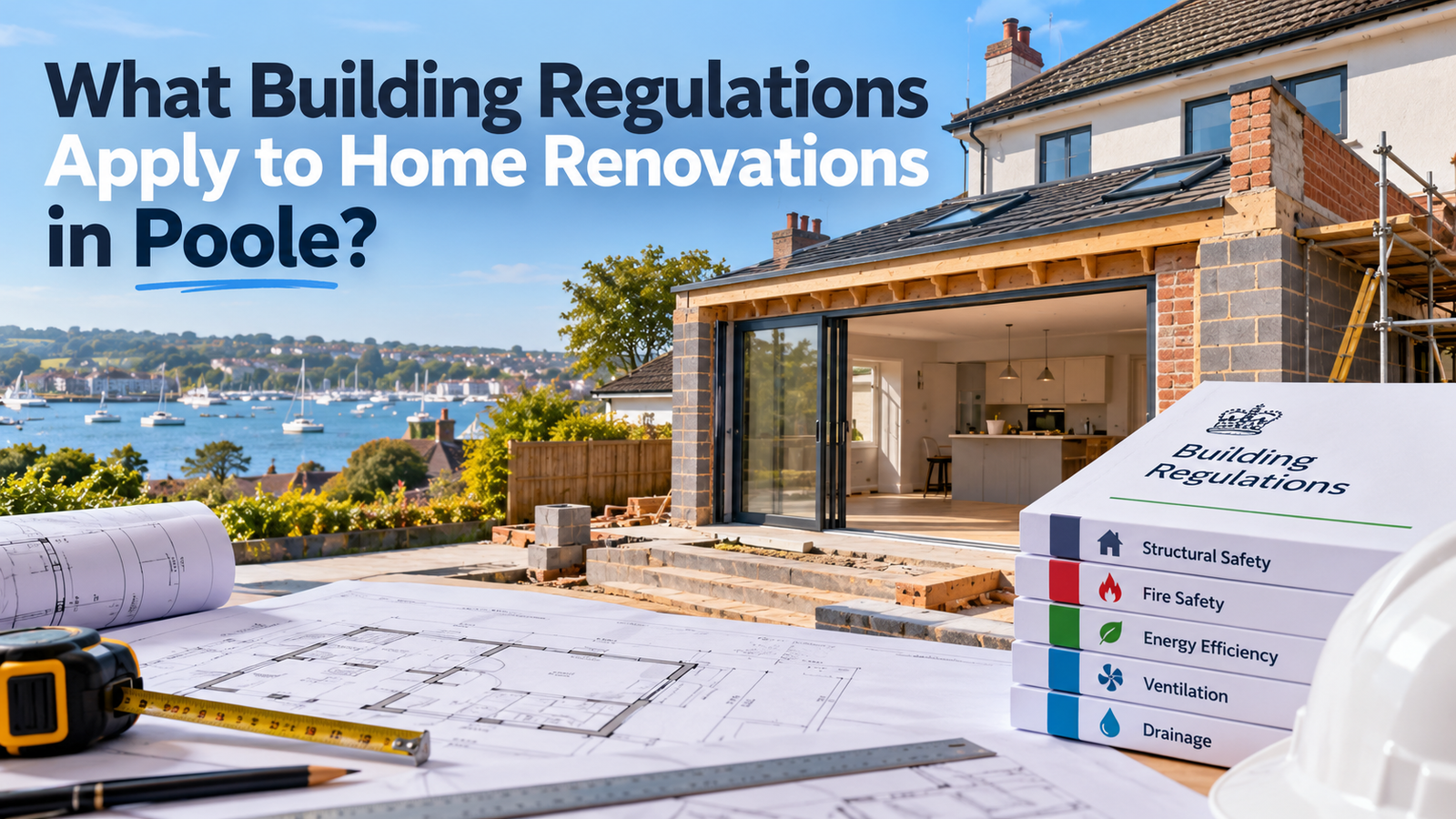
Building regulations cover structural safety, fire protection, drainage, insulation and ventilation, and most extensions need approval. You apply through your local authority building control team or a private approved inspector, and GOV.UK explains who needs to apply. A full plans application has a five week decision target, and at the end of the project you should receive a completion certificate. Keep it safe, because a buyer’s solicitor will ask for it when you sell. A builder who tells you building regulations are not needed on a normal extension is a serious warning sign.
If your extension is close to a shared boundary, as many are on semi detached and terraced homes, you may also need to follow the process set out in the Party Wall Act. Ask your builder how they handle this and who serves the notices. Whatever the answer, make sure the responsibility for drawings, applications, inspections and neighbour notices is written into the scope of work rather than assumed. Our services page explains how we separate and agree these responsibilities at the start of a project.
Compare Written Proposals Line by Line
You should always gather at least three written proposals, but the aim is to compare what each one includes rather than simply who is highest or lowest. A proposal that reads as a single line with no breakdown tells you very little. A strong one sets out the scope of work in detail, including groundworks, structure, roofing, glazing, electrics, plumbing and plastering, along with the materials and specifications, who manages building control inspections, who removes waste, and what is excluded.
If two proposals look very different, ask each builder to explain why. Differences usually come from missing items, vague allowances or different assumptions about the specification, and it is far better to discover that before you sign than halfway through the build. Pay attention to how the builder explains their proposal. Someone who walks you through each section patiently is showing you how they will behave on site.
Once you have chosen, insist on a written contract. It should cover the agreed scope, a clear timescale, how variations will be agreed and approved, and the payment schedule. Be cautious of anyone who asks for a large sum upfront. Staged payments linked to completed milestones, with the final payment held back until you are satisfied, protect both sides and are widely recommended.
Judge Communication and Project Management From the First Conversation
You will be working alongside your builder for weeks or months, so how they communicate during the early conversations is a strong indicator of how the project will run. Do they answer your questions clearly? Do they return calls and messages when they said they would? Do they explain the process in plain language, or hide behind jargon?
Good project management is what keeps a build on track. Ask who will manage the site day to day, how often you will receive updates, how materials and trades are scheduled, and how variations are handled if you change your mind or the site throws up a surprise. Ask what happens when something unexpected is uncovered, because every project meets one eventually, whether that is a drain in an unexpected place or an old lintel that is not up to the job. The real test of a builder is how quickly they tell you and how clearly they set out your options. Choose the one you trust to deliver bad news early.
Understand the Local Conditions in Poole
A builder who knows the area will spot issues that a newcomer might miss. Sandy ground close to Poole Harbour can influence foundation depth. Older semi detached homes in areas such as Parkstone often have drainage runs in positions that are not obvious from the plans. Period homes near Poole Old Town can carry planning constraints that affect what you are allowed to build, and extensions in parts of Canford Heath, Broadstone and Hamworthy each come with their own typical house types and access challenges.
Ask any builder you are considering what they have learned from working on similar properties locally. A thoughtful answer shows real experience, and it often means fewer surprises once the groundworks begin.
Questions to Ask Before You Appoint a Builder
Before you make your final choice, it helps to put a few direct questions to each builder. Ask how much experience they have with extensions like yours and whether you can see recent examples. Ask who handles design, planning and building control, what is and is not included in the written proposal, and how long the project is likely to take. Ask whether you will receive a written contract and a guarantee, who your day to day contact will be, and how unexpected issues are handled. A confident, experienced builder will welcome these questions, and the quality of the answers will tell you a great deal.
Warning Signs to Watch For
Some signals should make you pause. Be wary of a builder who pressures you to decide quickly, will not put anything in writing, cannot or will not show proof of insurance, has no recent completed work or references to share, or dismisses building regulations as unnecessary. A builder who is vague about who will actually be on site, or who becomes hard to reach before you have even signed, is unlikely to improve once the work begins. If something does not feel right, trust that instinct and keep looking.
How We Approach Extensions at Poole Builders
At Poole Builders, we start with a free site visit and a conversation about what you want the new space to do. We then put the scope in writing, agree who is responsible for each part of the process, and keep you informed through a single point of contact. When the project is finished, we walk the site with you, deal with any snagging, and hand over completion certificates and warranty documents. If you want to know more about who we are and how we work, visit our About page, or read more practical advice on our blog.
Frequently Asked Questions
How do I know if a builder is reputable?
Check for public liability insurance, recent references and photographs of completed work, and ask which trade bodies they belong to. Speak to a past client if you can, and make sure the builder is willing to provide a written contract and a detailed written proposal.
Should I hire an architect or use a builder who handles design?
For complex or two storey projects, an architect or designer can improve the layout and natural light significantly. For simpler projects, a builder who can arrange drawings and manage building regulations may be enough. Either way, make sure someone is clearly responsible for the structural design.
Do I need planning permission for a house extension in Poole?
Many rear extensions fall under permitted development, but limits apply and they are tighter in conservation areas and for flats. Always confirm with BCP Council before work begins, and agree in writing who is responsible for any application.
Do I need building regulations approval for an extension?
In most cases, yes. It is separate from planning permission and covers structure, fire safety, drainage and energy performance. You should receive a completion certificate at the end of the project.
How long does an extension take?
It depends on the size and complexity. A single storey rear extension usually runs for around eight to fourteen weeks, but your builder should give you a clear programme before work starts and explain what each stage involves.
When should I start looking for a builder?
As early as possible. Speaking to builders while you are still shaping the brief lets them advise on layout, structure and approvals before the design is fixed, which avoids changes later.
Final Thoughts
Choosing the right builder comes down to experience, transparency and trust. Look for relevant completed work, check the paperwork, understand who is responsible for approvals, compare proposals by what they include, and pay close attention to how a builder communicates before you sign anything. Do that, and you give your project the best chance of running smoothly and delivering a space you enjoy for many years.
If you are planning an extension in Poole, get in touch with Poole Builders to arrange a free site visit and talk through your plans with no obligation. You can also explore our loft conversion and extension service if you are weighing up different ways to add space.